
Why is global warming accelerating?
We study how heat, water, vegetation, oceans, and atmospheric circulation interact to shape the pace and regional expression of a warming climate.
Why it matters
Acceleration in warming is not only a global mean-temperature question. It changes extremes, water availability, ecosystem stress, and the time available for adaptation.
Topic
Marine heatwaves
Our contributions
- Connect the record-breaking 2023 marine heatwave papers with ocean-energy infrastructure risk, turning an extreme-event diagnosis into a research direction for marine climate resilience.
- Link marine heatwave science with the ocean meteorology and ecological-disaster monitoring project to support integrated early-warning applications.
Paper
 Featured
 Latest
 our team
Representative outputs
海洋气象信息与生态灾害一体化监测预警技术研究及应用示范
面向海洋气象信息与生态灾害,开展一体化监测预警技术研究与应用示范。
Related news

Land warming
Our contributions
- Quantify land-surface warming and terrestrial extremes through studies of Eurasian abrupt warming, wind droughts, fire, and afforestation climate-mitigation tradeoffs.
- Connect land-temperature and precipitation research with regional wind-resource projects to explain how warming reshapes terrestrial climate stress and renewable-energy reliability.
Paper
Representative outputs
21 世纪中国地表风速变化及其对风能生产的影响机制
研究中国地表风速变化及其对风能生产的影响机制。
Related news
Changing water cycle
Our contributions
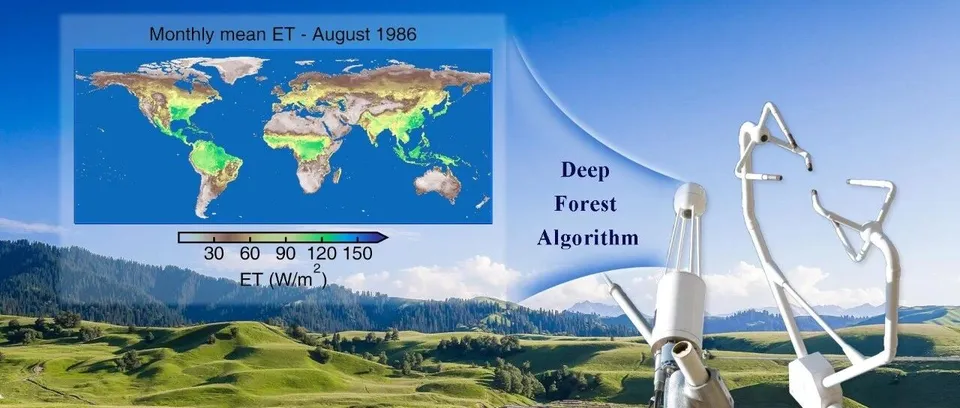
- Integrate reservoir-water-level monitoring, evapotranspiration datasets, groundwater recovery studies, and floodplain mapping to track how the water cycle changes under climate pressure.
- Translate water-cycle evidence into basin-scale water-food-energy, flood-risk, evapotranspiration, and floating-solar applications.
Paper
Representative outputs
Global evapotranspiration (WB-MTE)
A global monthly evapotranspiration dataset at 0.5 degree resolution from 1982 to 2009, built by coupling a water balance model with machine learning.
Floating solar power
Code resources for assessing energy production and water savings from floating solar photovoltaics on global reservoirs.
Related news
Earth system feedbacks
Our contributions
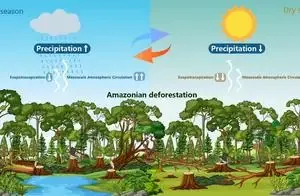
- Use cropland nitrogen forcing, tropical tree-cover evapotranspiration, soil respiration, carbon-removal, and albedo-fire studies to clarify coupled land-atmosphere feedbacks.
- Connect global-change courses, evapotranspiration data, and multi-greenhouse-gas assessment outputs to evaluate how carbon, water, climate, and energy processes interact.
Paper
LatestMultimetric analysis uncovers time-dependent climate forcings from China's 2.3-fold cropland reactive nitrogen emissions
FeaturedLatestour teamRepresentative outputs
Global evapotranspiration (WB-MTE)
A global monthly evapotranspiration dataset at 0.5 degree resolution from 1982 to 2009, built by coupling a water balance model with machine learning.
全球变化与陆气生态系统
围绕全球变化与陆气生态系统开展基础研究。