
How can renewable energy reshape human-Earth interactions?
We examine renewable-energy pathways, hydropower constraints, floating solar, wind-energy resilience, forestation, and restoration as coupled climate and resource questions.
Why it matters
Mitigation and adaptation choices alter land, water, energy infrastructure, and ecosystems at the same time, so their climate value must be evaluated with environmental constraints.
Topic
Wind energy
Our contributions
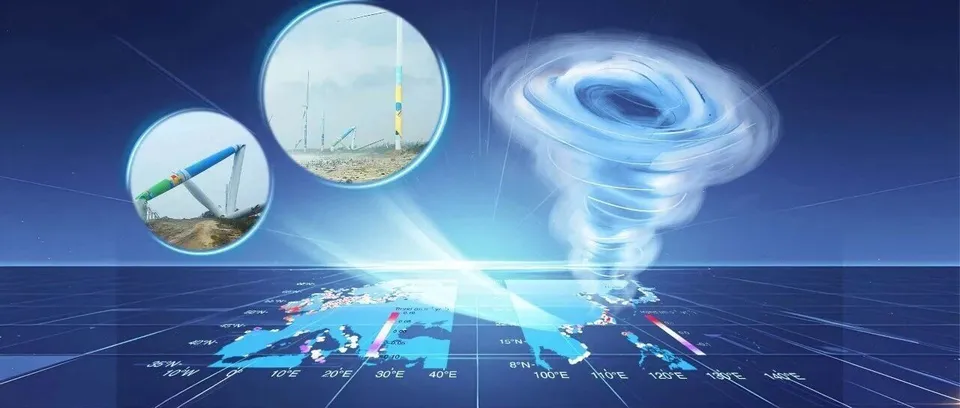
- Quantify wind-resource change and energy-security risk through studies of US wind-power decline, wind droughts, Chinese wind-energy safety, offshore extreme winds, and UAV-based wind estimation.
- Translate wind-climate science into Greater Bay Area offshore-wind assessment, Chinese surface-wind diagnostics, and GGWS-PCNN global wind-speed data products.
Paper



Representative outputs
GGWS-PCNN global wind speed
A global gridded monthly wind speed dataset using partial convolutional neural networks, HadISD observations, and 34 climate models for 1973-2021.
气候变化背景下的粤港澳大湾区海上风能资源评估与预测
评估并预测气候变化背景下粤港澳大湾区海上风能资源。
Related news
Solar energy
Our contributions
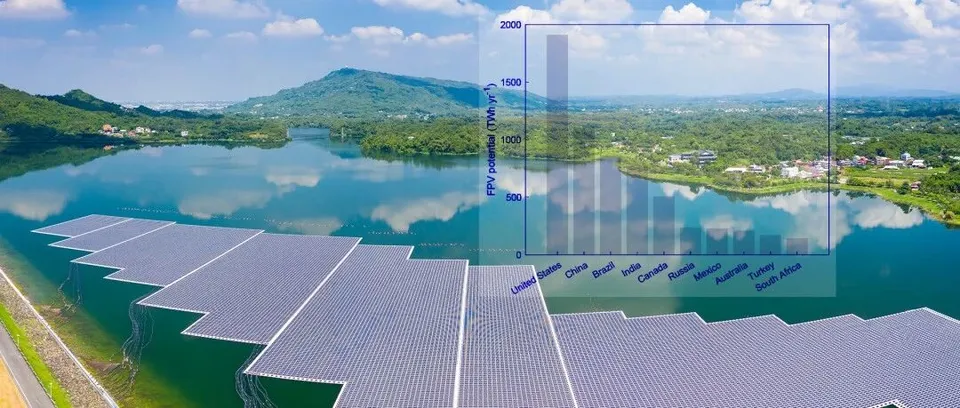
- Evaluate solar-energy expansion through water-surface solar inventories, cropland photovoltaic siting, albedo effects, threatened-bird range constraints, and floating photovoltaic potential.
- Connect floating-solar output with reservoir-scale power-generation and water-saving evidence to support climate-aware solar deployment.
Paper
Representative outputs
Floating solar power
Code resources for assessing energy production and water savings from floating solar photovoltaics on global reservoirs.
Related news
Hydropower
Our contributions
- Link reservoir water-level monitoring, hydropower potential, dam-driven sediment change, high-mountain hydropower instability, and reservoir land-cover impacts.
- Use Mekong water-food-energy and floating-solar outputs to evaluate how river-basin energy systems respond to climate variability and environmental constraints.
Paper
Representative outputs
Floating solar power
Code resources for assessing energy production and water savings from floating solar photovoltaics on global reservoirs.
气候变化对澜湄流域水-粮-能耦合系统的影响机制研究
围绕澜湄流域水、粮食与能源耦合系统,研究气候变化影响机制。
Related news
Energy storage
Our contributions
- Connect aquifer storage and recovery, carbon capture utilization and storage, and photovoltaic-driven battery deionization as storage-linked pathways in low-carbon transitions.
- Use storage-related papers to examine how subsurface, carbon, and battery systems can support water security, poverty alleviation, and sustainable energy use.